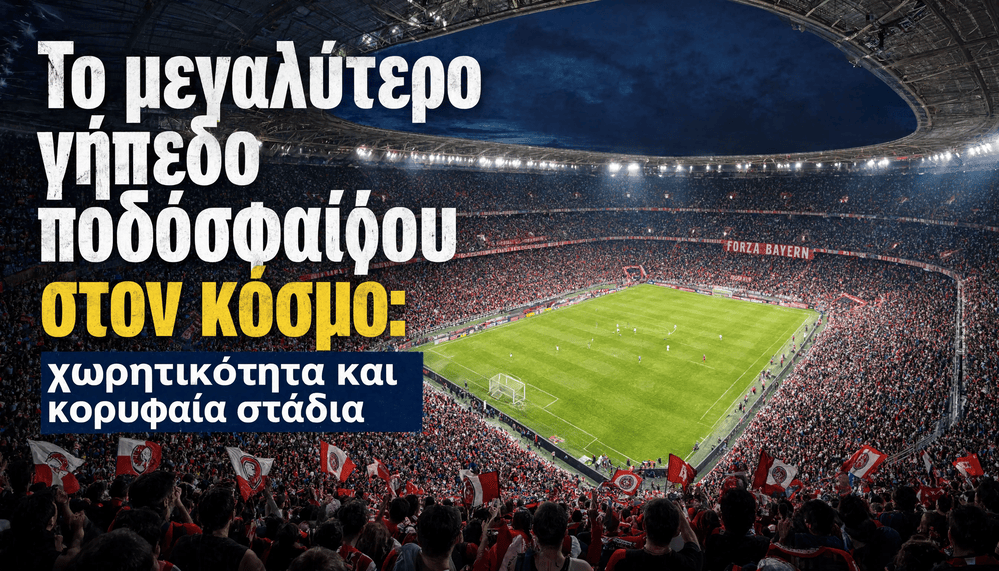
The largest football stadium in the world: capacity and top stadiums
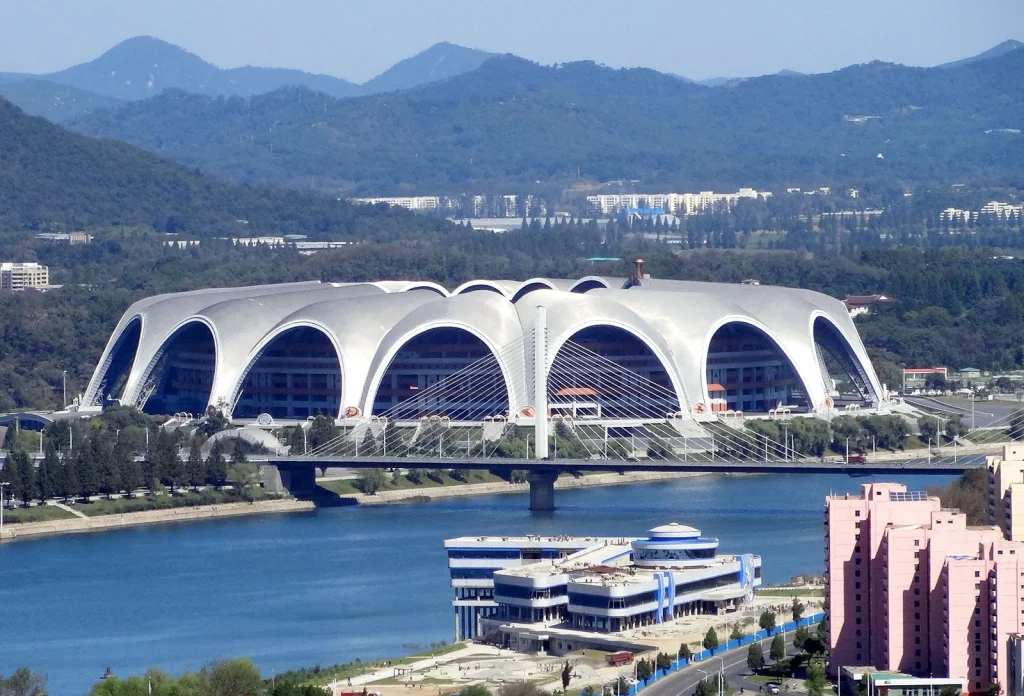
The largest football stadium in the world It is today Rungrado 1st of May Stadium in Pyongyang, North Korea, with an estimated capacity of approximately 114,000 seats. The impressive 150,000 that has been associated with the stadium for years relates to its older capacity before the 2014 renovation and the installation of new seats.
Size, however, tells only part of the story. From the perspective of a former professional footballer, a packed stadium becomes truly imposing when the acoustics, the proximity of the stands, and visibility enhance the pressure within the playing area. Therefore, when considering the The largest football stadiums in the world, We will compare not only their capacity, but also their history, football usage, and atmosphere.
🏆 What is the largest football stadium in the world?;
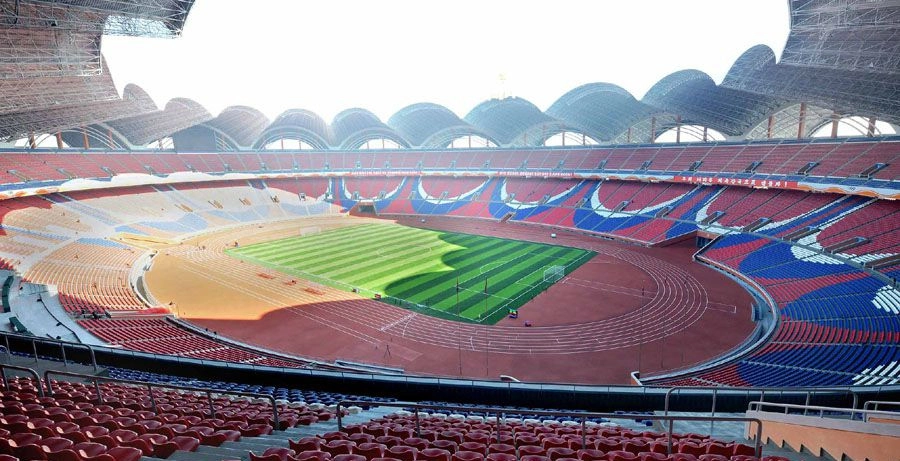
The Rungrado 1st of May Stadium, also known as Rungrado May Day Stadium, It is located on the Rungra Island of the Taedong River in Pyongyang, North Korea. It was inaugurated on May 1, 1989, and, with approximately 114,000 seats, It remains the largest football stadium in terms of capacity. It is used by the national men's and women's teams and the April 25 Sports Club, but also for athletics and major events such as the Arirang Festival.
Its initial official capacity was 150,000 seats, But after the renovation in 2014 and the installation of individual seats, it decreased to about 114,000. This explains the different capacities that are still mentioned for Rungrado.
Today’s capacity must be distinguished from historical capacity, attendance records, and temporary configurations. From an athletic perspective, more than 100,000 spectators make communication difficult and increase the concentration and composure requirements of the players.
📌 How do we rank the largest football stadiums in the world?
The ranking is based on Current usable capacity for football matches and not in historical attendance records. It includes functional stages with established football use, whether as stands for clubs or national teams or as venues for major events, regardless of whether they are purely football or multipurpose stages. Planned or under construction stages are not included.
the current usable capacity,
the regular use of it for football,
whether it is currently operating normally,
whether it is a football stadium or a multipurpose stadium.
Capacity may change due to renovations, safety requirements, conversion of standing positions to seated ones, closed auditoriums, or temporary configurations. Therefore, the classification reflects the Current operational picture at every stage.
⭐ The 10 largest football stadiums in the world
The ranking of largest football stadiums in the world It not only reflects the capacity. It includes national stadiums, historic club grounds, and modern facilities that have hosted some of the most important moments in international football.
| Position | Stadium | City – Town | Capacity |
|---|---|---|---|
| 1 | Rungrado 1st of May Stadium | Pyongyang – North Korea | ≈114.000 |
| 2 | Misr Stadium | New Administrative Capital – Egypt | 94.940 |
| 3 | Wembley Stadium | London – England | 90.000 |
| 4 | Lusail Stadium | Lusail – Qatar | 88.966 |
| 5 | FNB Stadium (Soccer City) | Johannesburg – South Africa | 87.436 |
| 6 | Borg El Arab Stadium | Bourq El Arab – Egypt | 86.000 |
| 7 | Bukit Jalil National Stadium | Kuala Lumpur – Malaysia | 85.500 |
| 8 | More Monumental | Buenos Aires – Argentina | 85.018 |
| 9 | Jakarta International Stadium | Jakarta – Indonesia | 82.000 |
| 10 | Luzhniki Stadium | Moscow – Russia | 81.000 |
1. Rungrado 1st of May Stadium
The Rungrado 1st of May Stadium Opened in Pyongyang in 1989 and renovated in 2014–15. Its current capacity is estimated at 10,000 people. 114,000 seats, Compared to 150,000 earlier, mainly due to changes in seating arrangements and the calculation of capacity. It is used by North Korea’s national teams and for other sporting and mass events, while the 16 curved sections of its roof resemble a flower. Athletically, the 100,000+ spectators create enormous intensity, although the track and the distance between the stands limit its immediacy.
2. Egypt Stadium
The Egypt Stadium in the New Administrative Capital of Egypt it has 94,940 seats And it is the largest stadium in Africa. It opened for football in 2024 as part of the new Olympic City and is intended for the national team of Egypt and major tournaments. It has an elliptical design, and its first international match was Egypt–New Zealand in 2024.
3. Wembley Stadium
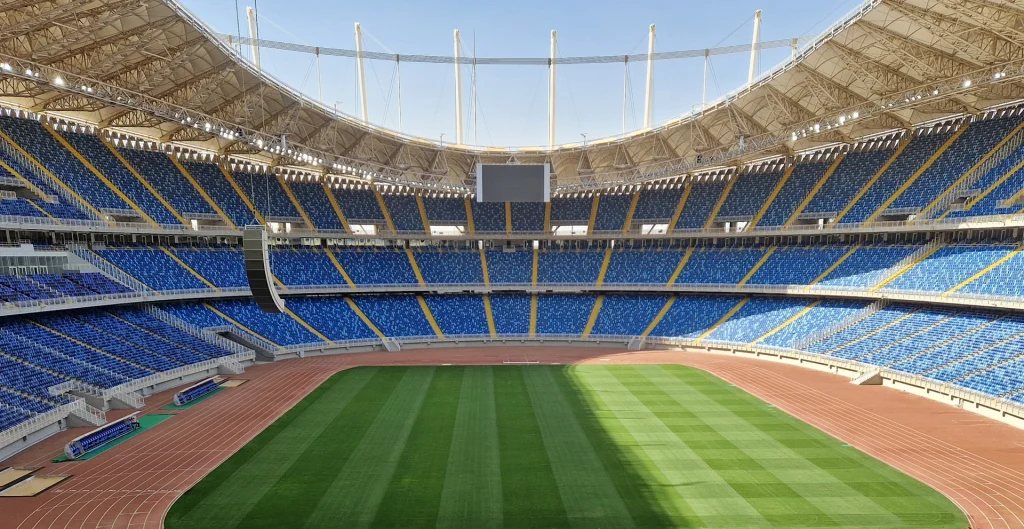
The Wembley Stadium It opened in London in 2007 and has 90,000 seats. It is the home of England and the most important domestic finals, with the 133-meter-high arch being its signature feature. It has hosted Champions League finals and the Euro 2020 final among others. It is the national home and one of the most important symbols of English football.
4. Lusail Stadium
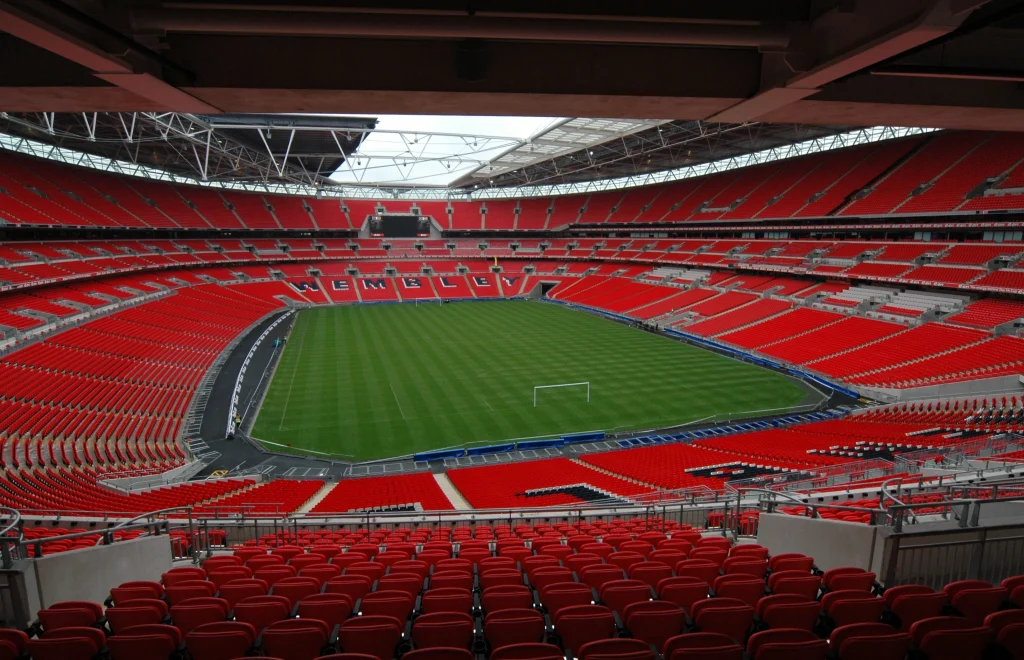
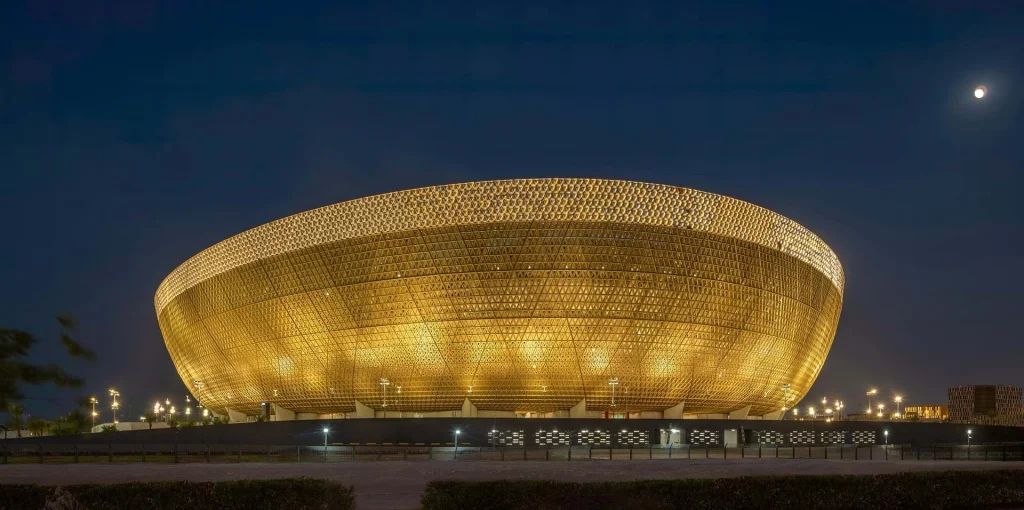
The Lusail Stadium In Qatar it officially opened in 2022 and has 88,966 seats. It is used for select major international matches and tournaments, while its design draws inspiration from traditional Arab lanterns and decorative patterns. It hosted both the Argentina–Saudi Arabia match and the Argentina–France final at the 2022 World Cup, directly earning a distinguished place in Qatar’s football history.
5. FNB Stadium
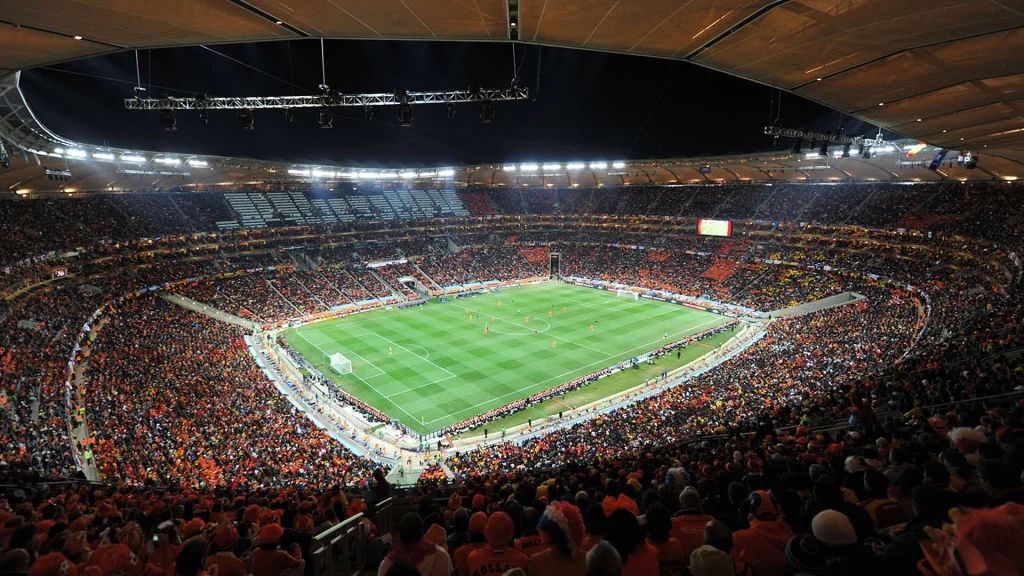
The FNB Stadium (Soccer City) It is located in Johannesburg and has 87,436 seats. It opened in 1989 and was reconstructed for the World Cup 2010, acquiring a facade that resembles an African vessel. It is used by Kaizer Chiefs and the South African national team and hosted the 2010 World Cup final. It is one of the most emblematic football stadiums in Africa.
6. Borg El Arab Stadium
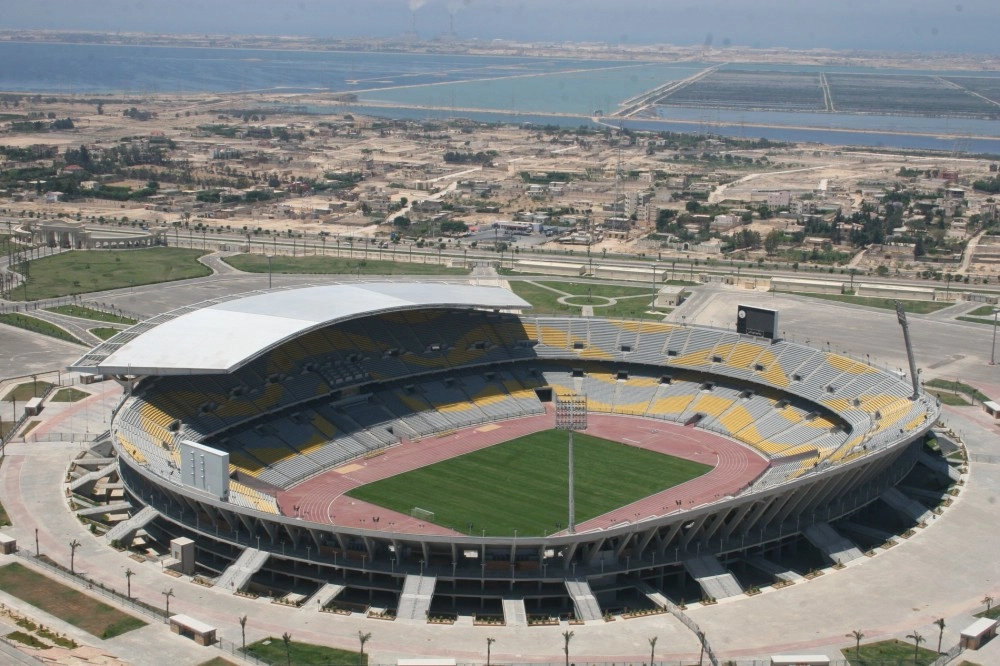
The Borg El Arab Stadium, Near Alexandria, it has 86,000 seats And is used by the national Egyptian team and major clubs in the country. It opened in 2007 and has a track around the playing field. In 2017 it hosted Egypt’s victory over Congo, which secured their qualification for the World Cup after 28 years, one of the most important moments in the country’s modern football history.
7. Bukit Jalil National Stadium
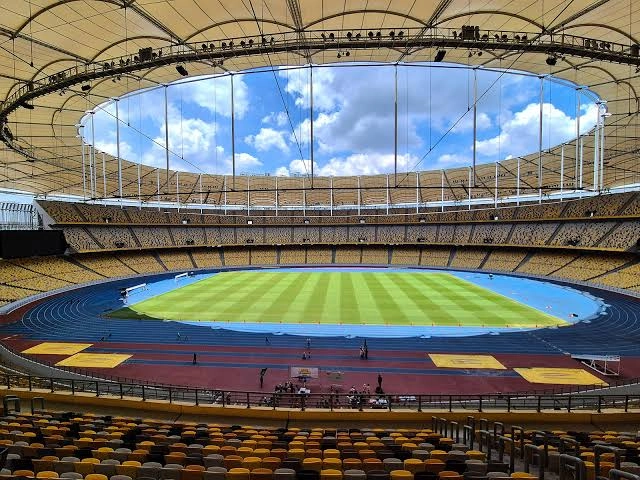
The Bukit Jalil National Stadium in Kuala Lumpur it has 85,500 seats It is the main home of the national Malaysia team. It was inaugurated in 1998 and was renovated before the 2017 SEA Games, acquiring a distinctive illuminated facade among other features. It has hosted important international matches and regional finals and is the quintessential national football scene of Malaysia.
8. Mâs Monumental
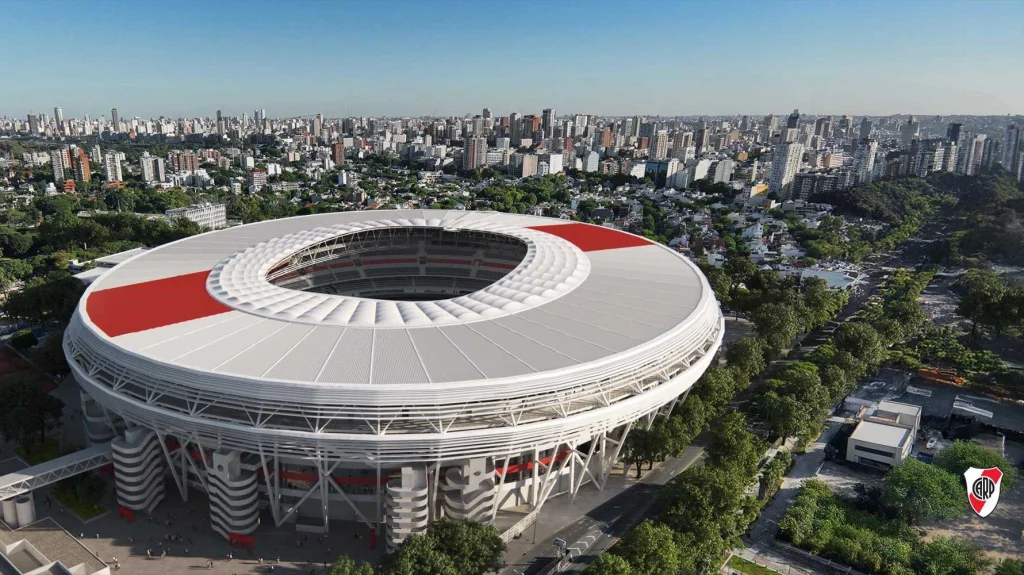
The Mâs Monumental It opened in Buenos Aires in 1938 and, after recent renovations, it features 85,018 seats. It is the home of River Plate and is also used by the Argentine national team, while the new lower tiers have brought the crowd closer to the pitch. Here Argentina defeated the Netherlands in the 1978 World Cup final. Today it is the largest stadium in South America and one of the most important venues in Argentine football.
9. Jakarta International Stadium
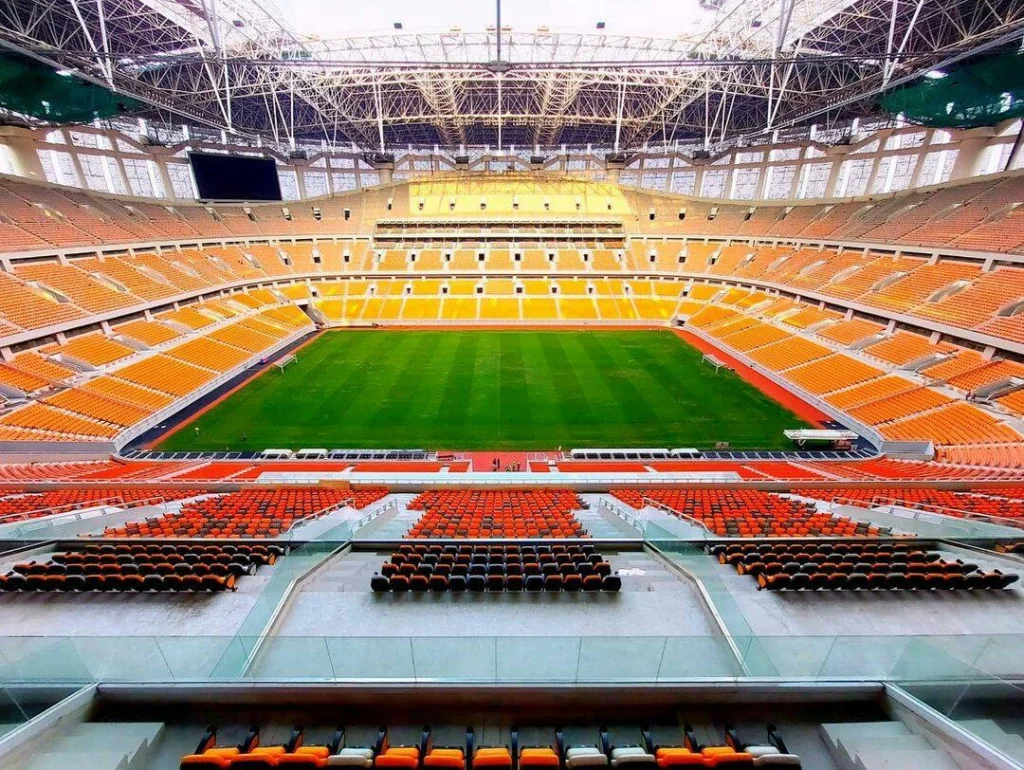
The Jakarta International Stadium It is available in Jakarta 82,000 seats And it is the home of Persija Jakarta. It is a modern, all-football stadium with a retractable roof and no pitch around the playing area. In 2023 it hosted the U-17 World Cup final between Germany and France. Its size and football design have made it a new central home for football in Jakarta.
10. Luzhniki Stadium
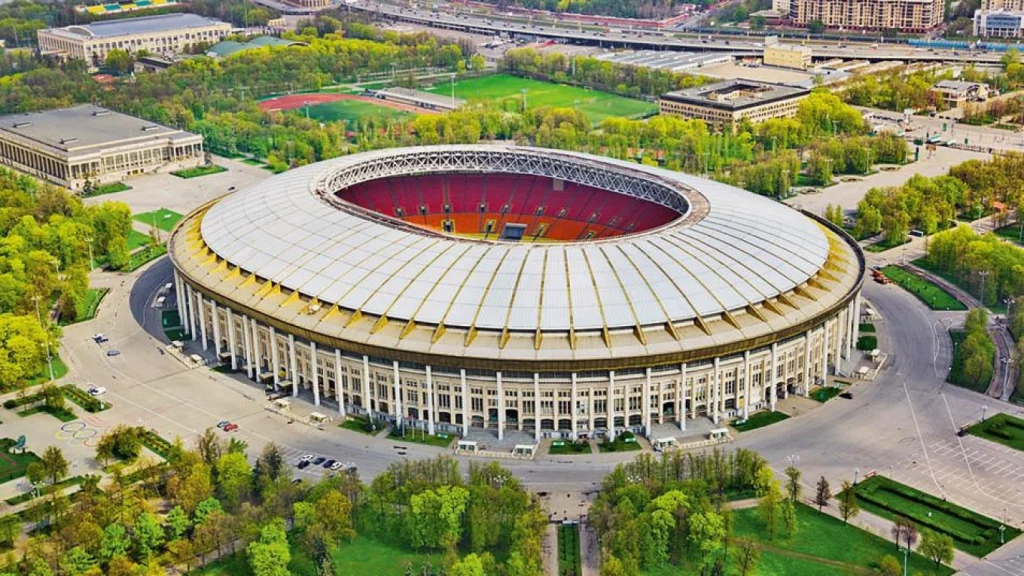
The Luzhniki Stadium It opened in Moscow in 1956 and has 81,000 seats After the major renovation of 2014–17, during which the historic exterior shell was preserved. It is used for important matches of the Russian national team and has hosted the Champions League final in 2008 and the World Cup in 2018. Its long history makes it one of the most important football stadiums in the country.
❓ Is Rungrado a purely football stadium?;
No. That Rungrado 1st of May Stadium It is a multipurpose stadium, with a track around the playing field. Apart from football, it has been used for athletics, other sports activities, and mass political and cultural events.
This distinction explains why the rankings for the the largest stadium in the world They differ. Some include every stage where football is played, even if it is primarily used for other sports, while others account for temporary configurations rather than the permanent capacity.
Our classification includes functional stages with established football use, whether as stands or as venues for major events, regardless of whether they are purely football or multipurpose.
❓ What is the largest stadium with a predominantly football character?;
The answer depends on the criteria. If we consider stages with systematic football use, permanent stands around the playing field and without a pitch, the Wembley Stadium of 90,000 seats constitutes the leading case.
Unlike the larger but multipurpose Rungrado Stadium, Wembley is England’s national stadium and regularly hosts football matches. Without an intermediate pitch, spectators are closer to the playing field, making their presence and noise more immediately perceptible to the players.
❓ What is the largest football stadium in Europe?;
The Spotify Camp New It is historically the largest football stadium in Europe, with 99,354 seats before its reconstruction. As the works continue, its approved capacity is 62,652 spectators, While after their completion it is expected to approach the 105,000 seats.
Its seat FC Barcelona Since 1957, Camp Nou has hosted, among others, the Champions League final in 1999, when Manchester United overturned a 1-0 deficit in stoppage time to beat Bayern Munich 2-1.
However, based on the Current operational capacity, The largest in Europe is today the Wembley Stadium of 90,000 seats. From the perspective of a former professional footballer, in historic venues such as Camp Nou and Wembley, the tradition and importance of the previous matches can add pressure beyond that created by the number of spectators.
⭐ The largest stadiums by continent
*The capacity of the 80,824 seats It concerns the design of the Estadio Azteca for the 2026 World Cup.
Historical matches at the world's largest stadiums
- Lusail Stadium – Argentina 3-3 France (4-2 pen.), World Cup 2022: Lionel Messi scored twice, Kilian Mbappe scored a hat-trick and Argentina won their third trophy in penalties, ahead of 88,966 spectators.
- FNB Stadium – Netherlands 0-1 Spain, World Cup 2010: In the first World Cup final on African soil, Andres Iniesta scored the goal 116th minute, gifting Spain its first World Cup title.
- Mâs Monumental – Argentina 3-1 Netherlands, World Cup 1978: Argentina won their first World Cup in extra time in front of their home crowd, with Mario Kempes scoring twice.
- Wembley Stadium – Italy 1-1 England (3-2 pen.), Euro 2020: England took the lead in the second minute with Luke Shaw, Leonardo Bonucci equalized and Italy won the trophy in penalties.
- Luzhniki Stadium – Manchester United 1-1 Chelsea (6-5 pen.), Champions League 2008: The first purely English final of the tournament was decided in penalties, with Edwin van der Sar stopping Nicolai Anelka's last shot after John Terry's missed penalty.
- Borg El Arab Stadium – Egypt 2-1 Congo, 2018 World Cup qualifiers: Mohamed Salah scored with a penalty in stoppage time, sending Egypt to a World Cup for the first time since 1990. 1990.
📌 Pitch capacity and attendance record: what is the difference?;
Η official capacity is the number of spectators that a stadium can accommodate with its current approved configuration. It differs from actual attendance, That is, those who were in the stands, but also from ticket sales, since not all the tickets sold are necessarily used.
The Record attendance It may be much higher than the current capacity. Many records were set in eras with standing sections, different safety regulations, and partly estimated spectator numbers, before renovations and individual seats reduced the capacity.
The 1923 FA Cup final at old Wembley was officially recorded 126,047 viewers, While the actual number is estimated at about 200.000. Similarly, FIFA gives 173,850 spectators for the Brazil–Uruguay match at the Maracanã in 1950, with the actual crowd possibly exceeding 100,000 people. 200.000.
❓ Does it create a larger venue with a better atmosphere?;
The large capacity can enhance the spectacle, but it does not guarantee a better atmosphere or a stronger home advantage. Distance and the slope of the stands, the roof coverage, acoustics, the audience’s density, the fan culture and the importance of the match all play a role. Thus, a packed derby or a crucial European match can create very different conditions on the same stage.
From the perspective of a former professional footballer, a smaller but packed stadium can be more intense than a huge facility with empty seats. When the entire stands are involved, the player feels the public reaction in every duel and critical moment. Therefore, capacity alone does not determine the atmosphere or the power of a stadium.
🥇 What is it like to play in front of 100,000 spectators?;
The impact of a full 100,000-seat stadium begins before kickoff, with the noise of the warm-up and the sight of the huge stands. In the match, even simple instructions between teammates may go unheeded, requiring more immediate communication. The adrenaline can help, but a mistake and the reaction of thousands of spectators increase the pressure, making calmness and concentration in the next phase necessary.
For a younger or less experienced footballer, the environment can be more difficult: some are fueled by intensity, while others rush or hesitate in their decisions. The presence of experienced teammates and strong leadership helps the team maintain its competitive discipline despite the pressure of the situation.
📣 Future stadiums that could break the record
The most important project that can change the top is the Grand Stade Hassan II, The plant is located in the Benslimane area, near Casablanca in Morocco. Its planned capacity is 115,000 seats, surpassing the approximately 114,000 of Rungrado.
In 2026, construction is underway, with completion scheduled for end of 2027, Before the 2030 World Cup, which will be co-hosted by Morocco, Spain and Portugal. The stadium is intended for major football matches and the 2030 organization.
The 115,000 seats remain planned capacity and they can change, just like the timeline or the final configuration.
👑 What is the largest football stadium in Greece?;
The largest stadium in Greece that is regularly used for football is the Olympic Stadium «Spyros Louis» (OAKA) in Maroussi, with nominal capacity 69,618 seats. It is a multi-purpose stadium with a track and in the 2026–27 season it is used as the home ground by Panathinaikos.
OAKA was inaugurated on 1982 And it was renovated for the 2004 Olympic Games, acquiring the characteristic roof by Santiago Calatrava. It has been used as a home ground by Panathinaikos and AEK and has hosted important domestic finals and European matches, including the Champions League/Cup Final of 2004. 1983, 1994 and 2007. In the latter, Milan defeated Liverpool 2-1.
The 69,618 seats are approximately 44,000 less of the ≈114,000 at Rungrado, showing the unusual scale of the largest stadiums worldwide. However, in a packed OAKA, especially in a derby or crucial European match, the intense fan culture and the importance of the game can create great pressure on the players, despite the smaller numerical scale.
📌 Interesting facts about the largest stadiums in the world
- The Rungrado 1st of May Stadium It had an initial capacity 150,000 spectators, against approximately 114,000 today.
- The roof of Rungrado consists of 16 twisted sections which resemble a flower.
- In Lusail Stadium, Argentina won the 2022 World Cup against France (3-3, 4-2 pen.).
- In FNB Stadium The first World Cup final was held on African soil in 2010, with Spain defeating the Netherlands. 1-0 in overtime.
- In Mâs Monumental, Argentina won their first World Cup in 1978, defeating the Netherlands 3-1 in overtime.
- In the old one Wembley were officially recorded 126,047 viewers in the 1923 FA Cup final, with the actual crowd estimated at 200.000.
- The OAKKA, With 69,618 seats, It has hosted three Champions League/Cup finals: 1983, 1994 and 2007.
- The under construction Grand Stade Hassan II In Morocco it is planned for 115,000 spectators, surpassing Rungrado once it is completed with this capacity.
🤩 Beyond capacity
The largest football stadium in the world remains the Rungrado 1st of May Stadium, With approximately 114,000 seats. However, comparisons require attention to the permanent capacity, renovations, and the different configurations of each stage.
Size isn’t the only thing that determines the significance of a stadium. Football history, architecture, fan culture, and the importance of the match all influence the atmosphere equally. From the perspective of a former professional footballer, the most memorable stadium isn’t always the largest, but rather the one where design, audience, and occasion combine to create real pressure.
❓ Frequently asked questions

10FS up to 100€
Leon is a betting company with roots in Eastern Europe and many years of experience in the online betting sector.

100% to €100
Twin Casino Greece combines sports betting, live markets, and competitive odds on a fast and user-friendly platform for Greek players.

100% up to €100
Betsson has over 50 years of history, evolving from Cherry to today's Betsson Group, with the first online casino to begin in the early 2000s.

50% Up to €50
Winmasters Casino is a complete online casino with a large variety of games, such as slots from top providers and live or virtual table games.
100% to 100€
Pamestoixima.gr offers a more personalized betting experience by presenting teams, leagues, and markets according to each player's preferences.

100% up to €250
Bizzo is a well-known online casino that launched in 2021 with an excellent selection of over 3000 different games from over 60 developers.

100% bonus up to 500€
Stoiximan stands out for its live betting with live streaming, so the user can watch and bet in the same place.

£25 + 50 Free Spins
Bet365 is one of the most well-known brands in sports betting and online casino, with over 20 years of presence and 53 million users worldwide.

100% cashback up to €500
For the Greek player, efbet stands out for the greatest control over the bet – Cash Out without commission, Edit Bet and Bet Builder, along with 100% margin on selected events.

€100 bonus + €75 Free Bet
ElaBet stands out for its strong and frequent sports offerings — up to €100 bonus + €75 Free Bet for new players, Mega Boost up to 100%, and special promos for football, basketball, and tennis.